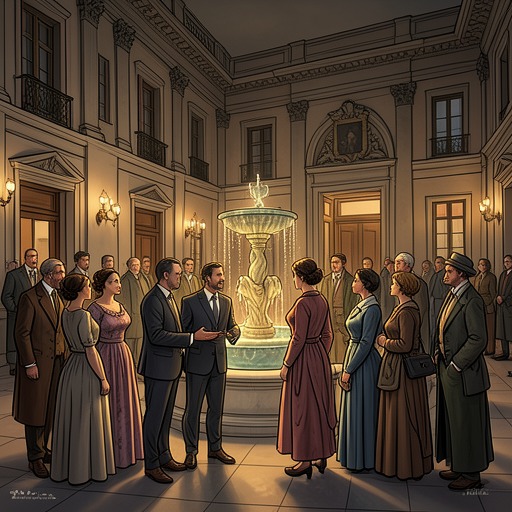
State Political Directorate
A Gentleman in MoscowThe State Political Directorate, referred to as the OGPU, is a shadowy presence in the hotel’s political life rather than the subject of a depicted operation. Its deputy head appears on a reservation list as a figure whose status shapes the atmosphere around the Boyarsky restaurant, while the surrounding scenes show how political authority is managed through everyday service, etiquette, and caution.
A Name on the Reservation List
When Andrey reviews the evening’s bookings with Count Alexander Ilyich Rostov, the list appears ordinary until its occupants are considered: the Commissar of Transport dislikes American journalists, the German ambassador dislikes the Commissar, and the OGPU’s deputy head is loathed by all. The list locates the organization within a crowded field of rivalries and official power, but gives no explanation for the deputy head’s reputation.
The immediate practical problem concerns two members of the Politburo, both hosting tables during the second seating. Because they are relatively new to their positions, neither needs the best table; what matters is that they receive identical treatment, including tables of equal size and equal distance from the kitchen door. The scene shows the restaurant converting political sensitivities into precise arrangements. It does not say that the OGPU’s deputy head is part of this particular seating problem, but his presence on the same list gives the calculations an unmistakably political setting.
Authority in Everyday Encounters
Elsewhere, the hotel’s assistant manager tells Count Alexander Ilyich Rostov that staff must stop addressing him as Your Excellency. He hesitates over the reasons, then invokes the changed times; the Count accepts the change as part of a gentleman’s duty. The exchange does not identify the OGPU as the source of the instruction. Its relevance lies in the broader social atmosphere of the novel, where political change reaches the hotel through altered forms of address and the careful conduct of its staff.
The restaurant scenes likewise present service as a discipline of attention. Count Alexander Ilyich Rostov understands a waiter’s role to include overhearing what guests say, just as a capable servant anticipates needs without being asked. In a gathering of senior officials, such attentiveness means hearing every private exchange. This establishes the conditions in which political power is observed and negotiated, but the text does not identify the OGPU as the listener, nor attribute the Count’s professional practice to the organization.
The Limits of Its Depiction
The OGPU’s clearest function in these scenes is reputational: its deputy head is a person whose inclusion among the diners is enough to register the reach of official power in the hotel’s social world. The novel supplies no named officer, investigation, arrest, or other action by the organization in this material, and it does not explain the grounds for the deputy head’s unpopularity.
That restraint keeps the organization at the edge of the narrative. The hotel’s staff must navigate a world of political rank and shifting conventions, but the evidence does not collapse every act of caution or every change in procedure into the OGPU’s work. Its brief appearance makes the state’s presence felt through a name on a list and the reactions that name carries, rather than through a direct account of its methods.